Cold-Weather Field Testing
Real arctic nights, documented.
by Alaska Northern Night · Research & Education
Every night of the season our professional photographers are out documenting the night sky for aurora research, in some of the harshest weather Alaska can throw at us. Products go out with them. Partners receive field photography and video, a logged record of the conditions, and plain written notes on how the product performed.
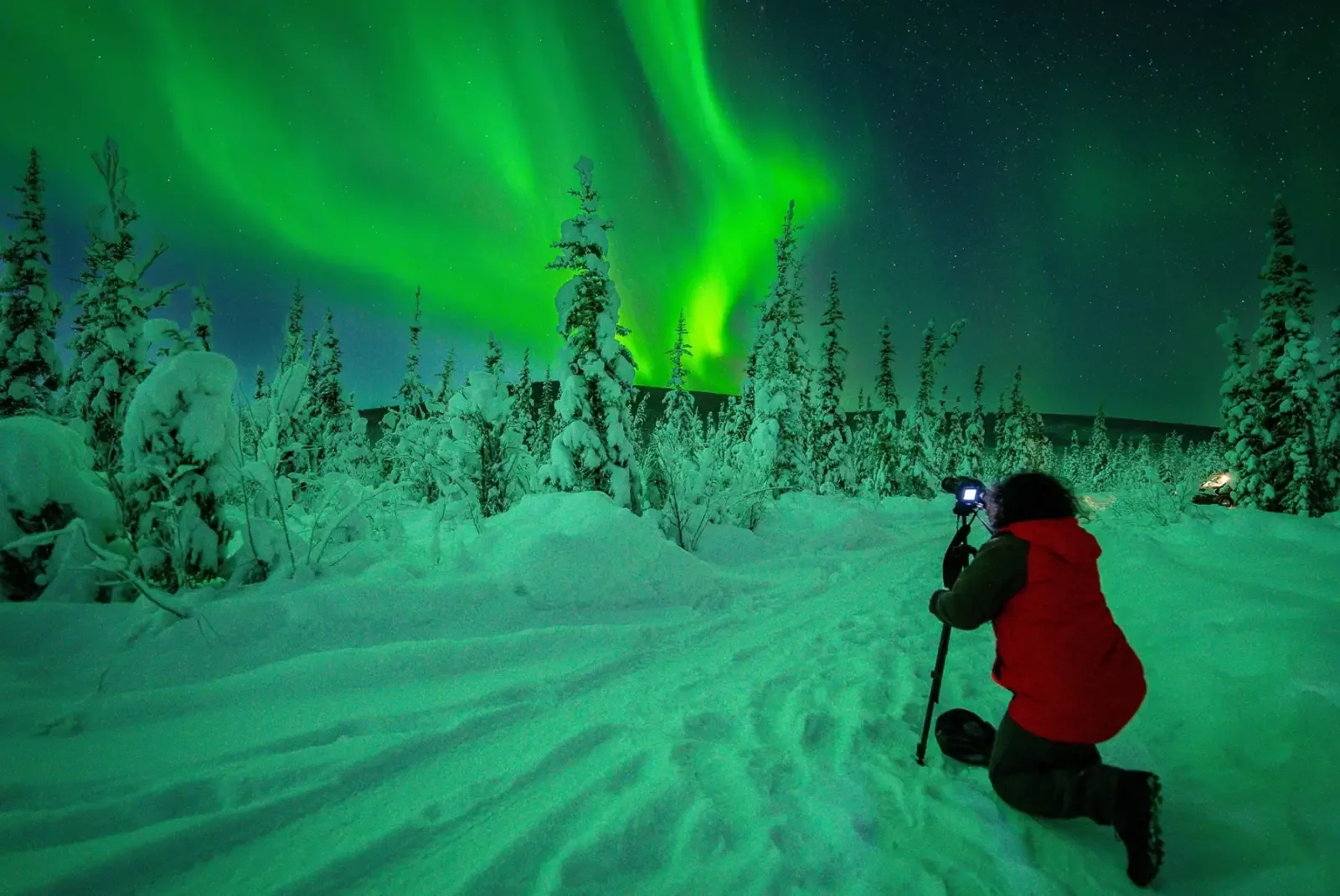
A research crew that works outside, every night.
We document the night sky for aurora research and run northern lights operations from Fairbanks. That means people and equipment outside for hours, every night of the season, whatever the temperature does.
Nightly night-sky photography for aurora research and data, plus northern lights operations.
Every night, late August to mid-April.
−50°F the coldest our crews worked last winter. −20°F to −40°F is routine December to February.
Up to about 20 hours a day around the December solstice.
Professional photographers, out every night of the season.
Sony full-frame (a7S III) · Insta360 · GoPro.
SkyCommand, our own conditions system: temperature, time, sky conditions and aurora activity for every session.
Interior Alaska. Our viewing sites are among our best-kept secrets, so records list the region only.
The cold and the camera crew, together.
Labs can make it cold. Production crews can make it look good. We're already out in the deep cold every night with professional equipment, so your product is tested and documented in the same session, in conditions that can't be staged.
Top-of-the-line Sony bodies built for the dark. Your product under the aurora at −40°F.
Hero stills · 4K video · night timelapseProduct, crew, snow and sky in one capture, reframed later for any format.
360° video · reframed cuts · verticalFootage from gloved hands, vehicle mounts and long sessions outside.
POV · mounted · long durationExperienced night photographers who know how to light, frame and capture in the dark and the cold.
Directed shots · on-brand framingBrand names describe equipment we use. No endorsement by those brands is implied.
Gear that has to work in the dark and the deep cold.
Products are used the way your customers would use them: for hours, outside, in the dark, while the temperature keeps dropping. Not on a bench for ten minutes.
Hours of long exposures every night on Sony a7S III bodies.
Battery life · lens fogging · controls with gloves onHow a phone actually captures the aurora, and how it holds up after hours outside.
Night-mode results · cold shutdowns · chargingWorn all night by crew members who stand in the cold for a living.
Warmth over hours · dexterity · wear and fitRunning cameras, phones and warmth through long nights below zero.
Real capacity in the cold · recharge · reliabilityLights, chargers, mounts and accessories in working winter vans, every night of the season.
Cold starts · condensation · daily wearField evidence, not a lab sheet.
Each engagement delivers three things: media of the product in real use, a conditions record for every session from SkyCommand, and written field notes. If something fails at −30°F, we say so, and you hear it first.
| Session | Out | In | Temp range | Sky | Aurora | Product notes |
|---|---|---|---|---|---|---|
| Night 1 | 21:40 | 03:15 | −18°F → −27°F | Clear | Kp 5 · active | Battery 41% at 02:00 |
| Night 2 | 22:05 | 02:50 | −38°F → −47°F | Partly cloudy | Kp 3 · steady | Zipper stiff after 3 h |
| Night 3 | 21:30 | 04:00 | −22°F → −24°F | Light snow, then clear | Kp 2 · quiet | No fogging, gloves on |
Long nights and deep cold, every winter.
Interior Alaska has some of the harshest, most reliable deep cold anywhere people live and work. Below zero is routine from November to March; the coldest stretch runs December to February, and cold snaps can last for days.
| Aug | Sep | Oct | Nov | Dec | Jan | Feb | Mar | Apr | |
|---|---|---|---|---|---|---|---|---|---|
| Darkness | |||||||||
| Cold | |||||||||
| Crews out |
From first email to final report.
Engagements are scoped together up front: number of nights, what to document, how media may be used, and cost.
The product, what you want to learn, and your timing.
Nights, documentation, media terms and cost, agreed in writing.
Crews use the product on real nights; every session is logged.
Media, conditions record and field notes, delivered to your team.
Serious data, straight answers.
Our viewing sites stay confidential. Records and media list the region only: Interior Alaska or Fairbanks.
We document what actually happens. We can't guarantee a temperature, the aurora, or an outcome on any given night.
We don't certify products. If you also need formal testing, Fairbanks has an established cold-weather testing community, and our field records can sit alongside it.
Tell us about your product.
A few details are enough to start. We'll reply with questions, timing and a simple plan.